

Web Server Software - IIS vs Apache vs Nginx: Full Explanation, Differences, Pros & Cons, and When to Use Each
1. Introduction
When building a website or web application, one of the most important decisions is choosing the web server software. A web server is responsible for handling requests from users (via browsers) and delivering web pages, images, APIs, and more.
Three of the most widely used web servers today are:
- Microsoft IIS
- Apache HTTP Server
- Nginx
Each has its own architecture, strengths, and ideal use cases. Choosing the wrong one can lead to performance issues, scalability problems, or unnecessary complexity.
This guide will walk you through everything you need to know, from basics to advanced comparisons.
What is a Web Server?
A web server is software that:
- Receives HTTP/HTTPS requests from clients (browsers)
- Processes those requests
- Returns the appropriate response (HTML, JSON, files, etc.)
Example:
When you visit a website, your browser sends a request → the web server responds with the page.
2. Microsoft IIS (Internet Information Services)
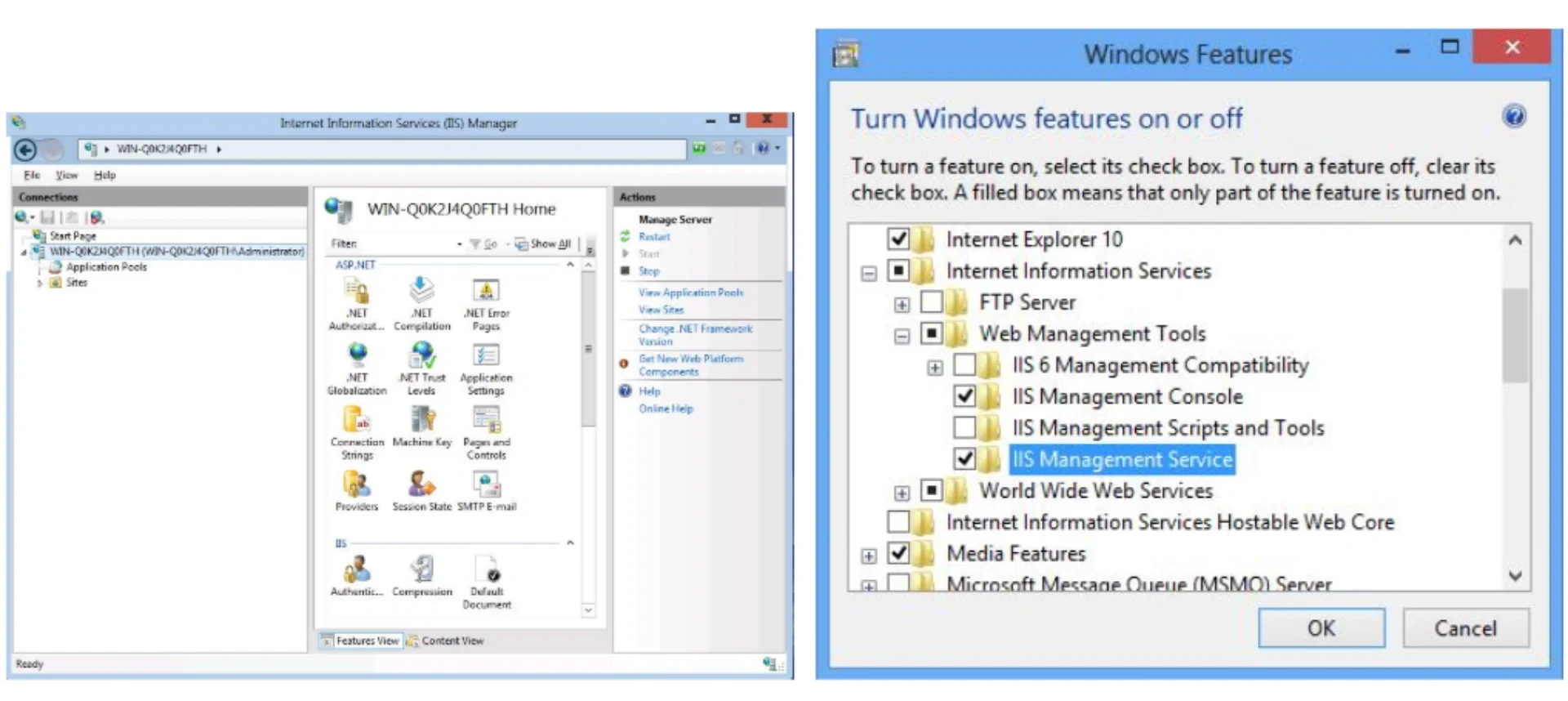
Microsoft IIS is a web server developed by Microsoft and designed specifically for Windows environments. It integrates deeply with Windows Server and is commonly used for .NET applications.
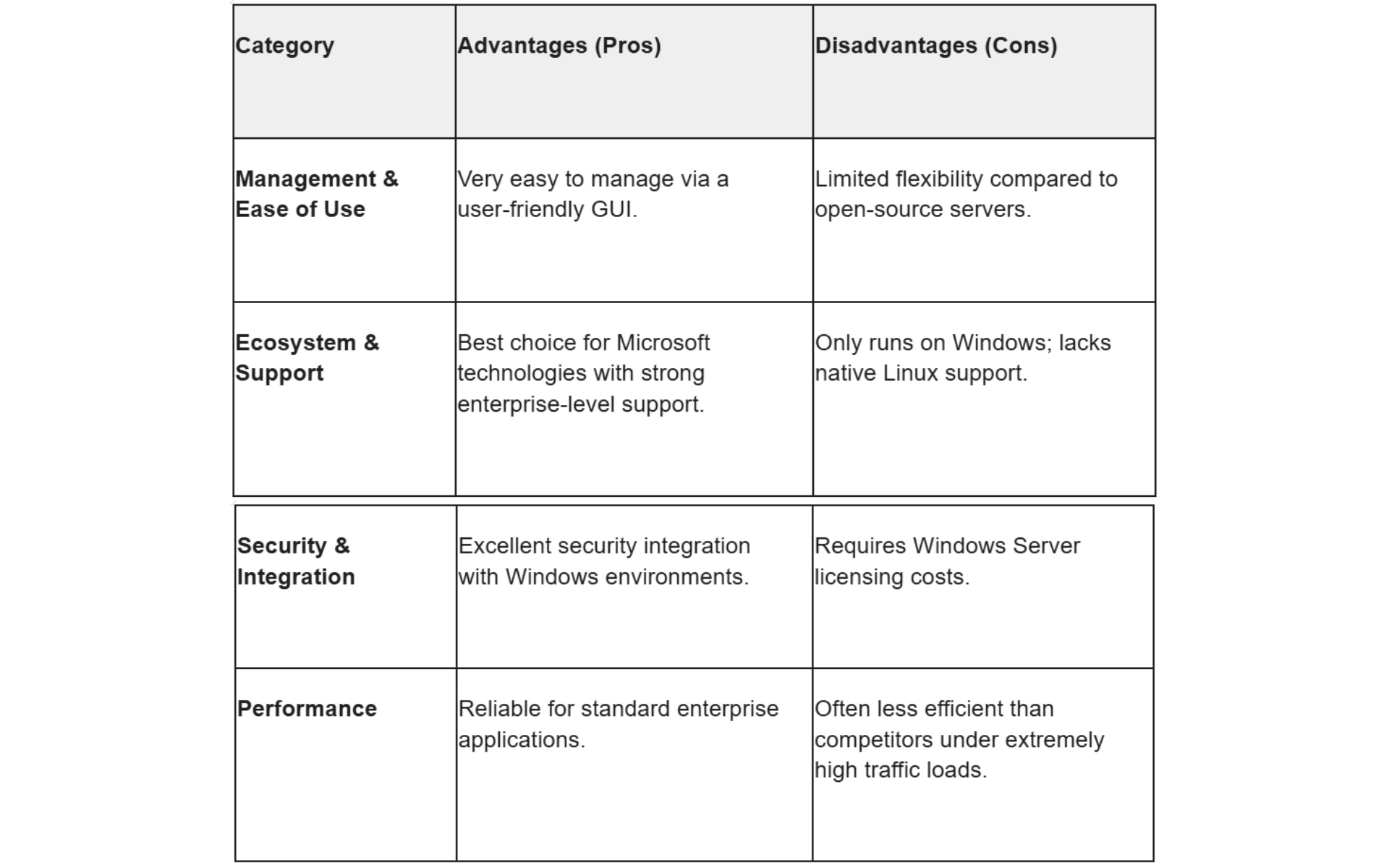
Internet Information Services (IIS) offers native support for both ASP.NET and .NET Core, making it a natural choice for developers on the Microsoft stack. Its GUI-based management interface lowers the barrier for beginners, while built-in security features such as Windows Authentication and tight integration with Active Directory provide enterprise-grade access control. Under the hood, IIS employs a thread-based architecture: each incoming request is assigned its own thread. This model performs reliably under moderate traffic but can lead to higher memory consumption when the system is subjected to heavy load.
3. Apache HTTP Server

Apache HTTP Server is one of the oldest and most widely used web servers, developed by the Apache Software Foundation.
It’s the backbone of the classic LAMP stack (Linux, Apache, MySQL, PHP).
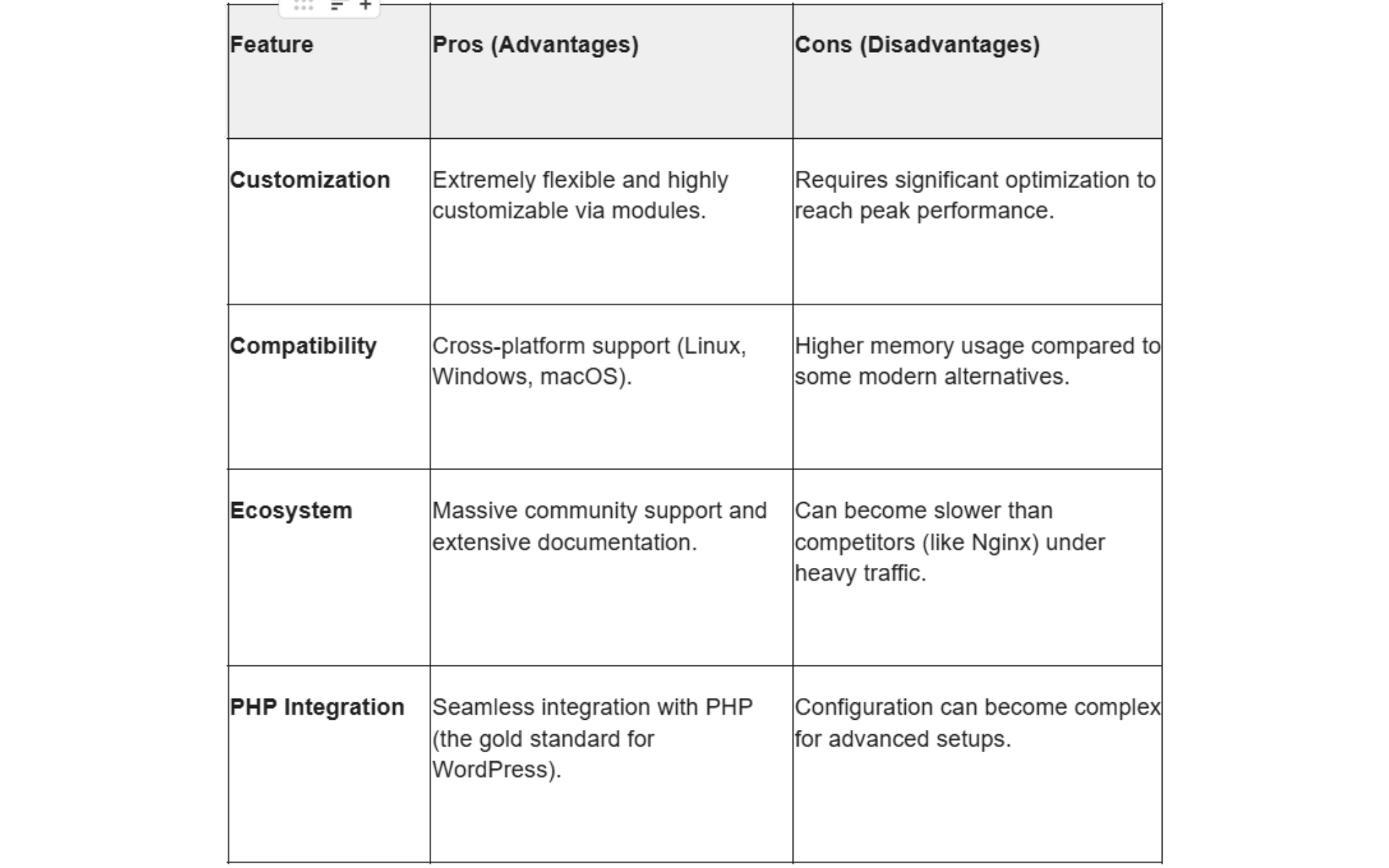
Apache is an open-source and free web server that offers extensive flexibility through its modular architecture, allowing users to add or remove features as needed. It supports multiple programming languages, including PHP, Python, and Perl, and provides .htaccess support for directory-level configuration without requiring changes to the main server settings. Under the hood, Apache operates using either a process-based or thread-based model, where each incoming request is handled by a new process or thread. While this approach offers great flexibility, it can become resource-heavy under high traffic conditions, as the system may struggle to manage a large number of simultaneous processes or threads efficiently.
4. Nginx (Engine-X)
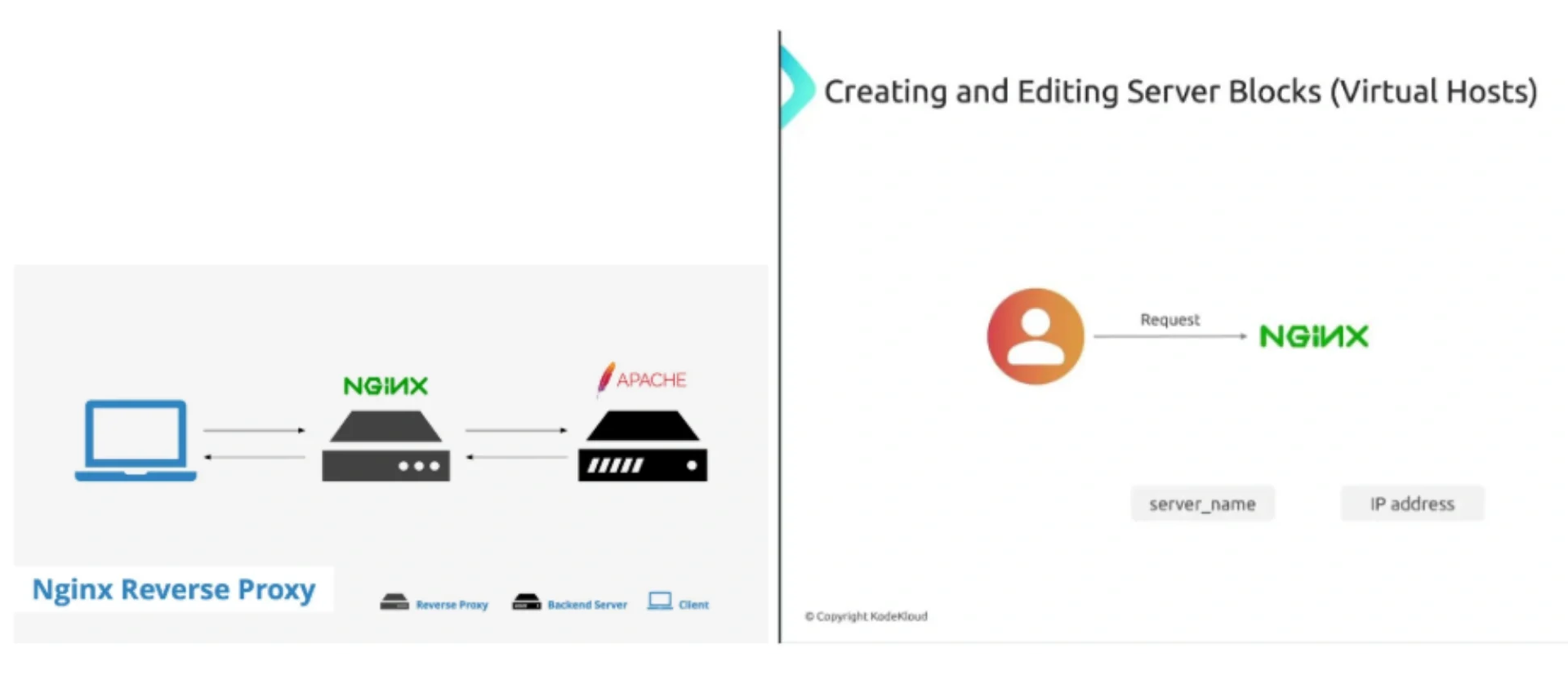
Nginx is a modern, high-performance web server designed to handle high concurrency and heavy traffic efficiently.
It’s widely used by high-traffic platforms like Netflix and Instagram.
Nginx is renowned for its event-driven, asynchronous architecture, which makes it exceptionally efficient compared to traditional server models. Instead of spawning a new process or thread per request, a single worker can handle thousands of simultaneous connections, resulting in very low memory usage. This design makes Nginx ideal for high-traffic systems, where it excels as a reverse proxy, offers robust load balancing capabilities, and serves static files extremely fast.
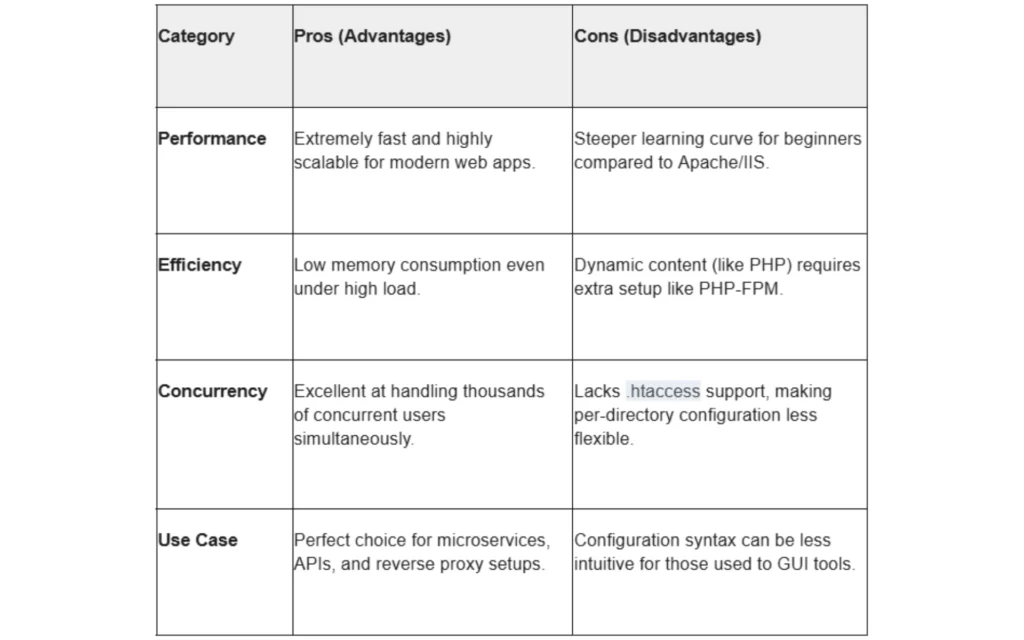
5. IIS vs Apache vs Nginx: Side-by-Side Comparison
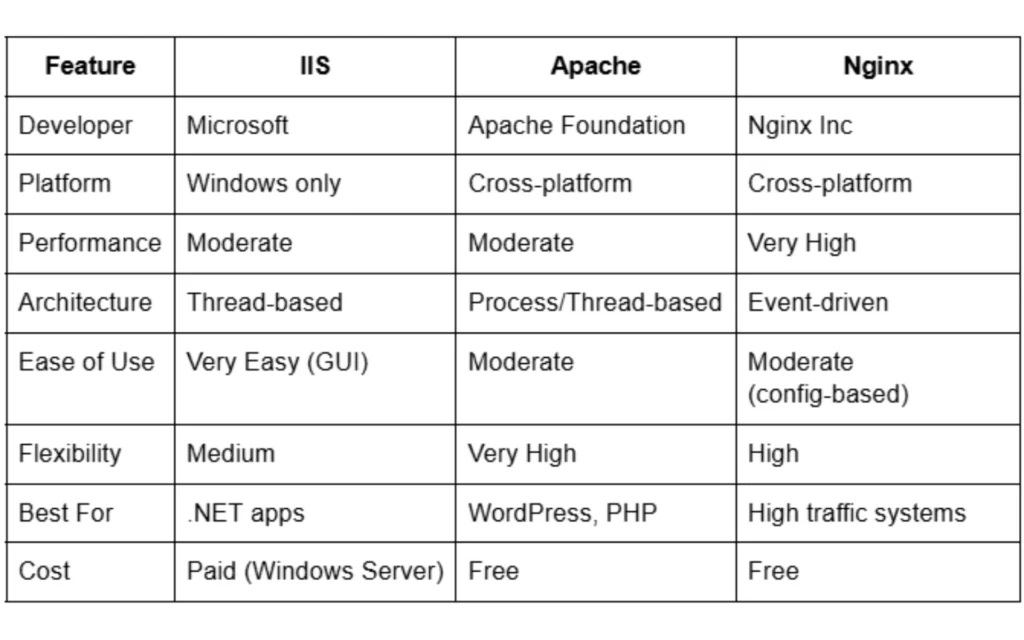
When comparing the key differences among IIS, Apache, and Nginx, several important factors emerge across four main areas. In terms of performance, Nginx is the clear winner for high-traffic scenarios due to its event-driven architecture, while Apache performs adequately but requires careful tuning to handle heavy loads, and IIS remains stable though not typically optimized for extreme scale. For ease of use, IIS offers the easiest experience thanks to its graphical user interface, Apache falls in the moderate range, and Nginx demands solid configuration knowledge. Regarding **flexibility, Apache wins with its extensive module system and .htaccess support, Nginx is less flexible but more efficient by design, and IIS is relatively structured but feels limited outside the Microsoft ecosystem. Finally, looking at ecosystem compatibility, IIS is the best choice for Microsoft technologies like .NET, Apache excels in PHP and WordPress environments, and Nginx is ideally suited for modern, scalable applications.
The choice between IIS, Apache, and Nginx ultimately depends on your specific project requirements and environment.
Choose IIS if you are
- working with ASP.NET or
- rely on Windows Server, and
- if you prefer easy GUI-based management over command-line configuration.
Choose Apache
- if you are building WordPress or
- PHP-based applications, need the flexibility and
- deep customization that modules and .htaccess provide, or
- if you are deploying on shared hosting where directory-level configuration control is essential.
Choose Nginx
- if you expect high traffic, prioritize performance and scalability, or
- are building APIs or
- modern web applications that require efficient handling of many simultaneous connections with low memory overhead.
6. Conclusion
In conclusion, there is no single “best” web server, only the best one for your specific use case. Microsoft IIS excels in Windows-based environments and for .NET applications, Apache HTTP Server stands out for its flexibility and compatibility with WordPress, and Nginx leads in performance and scalability. For those just starting out, Apache offers an accessible entry point thanks to its simplicity and .htaccess flexibility; as your traffic grows and scaling becomes a priority, moving to Nginx is a logical next step. IIS is best adopted only if you’re already working within the Microsoft ecosystem, where its integration and GUI management provide clear advantages.